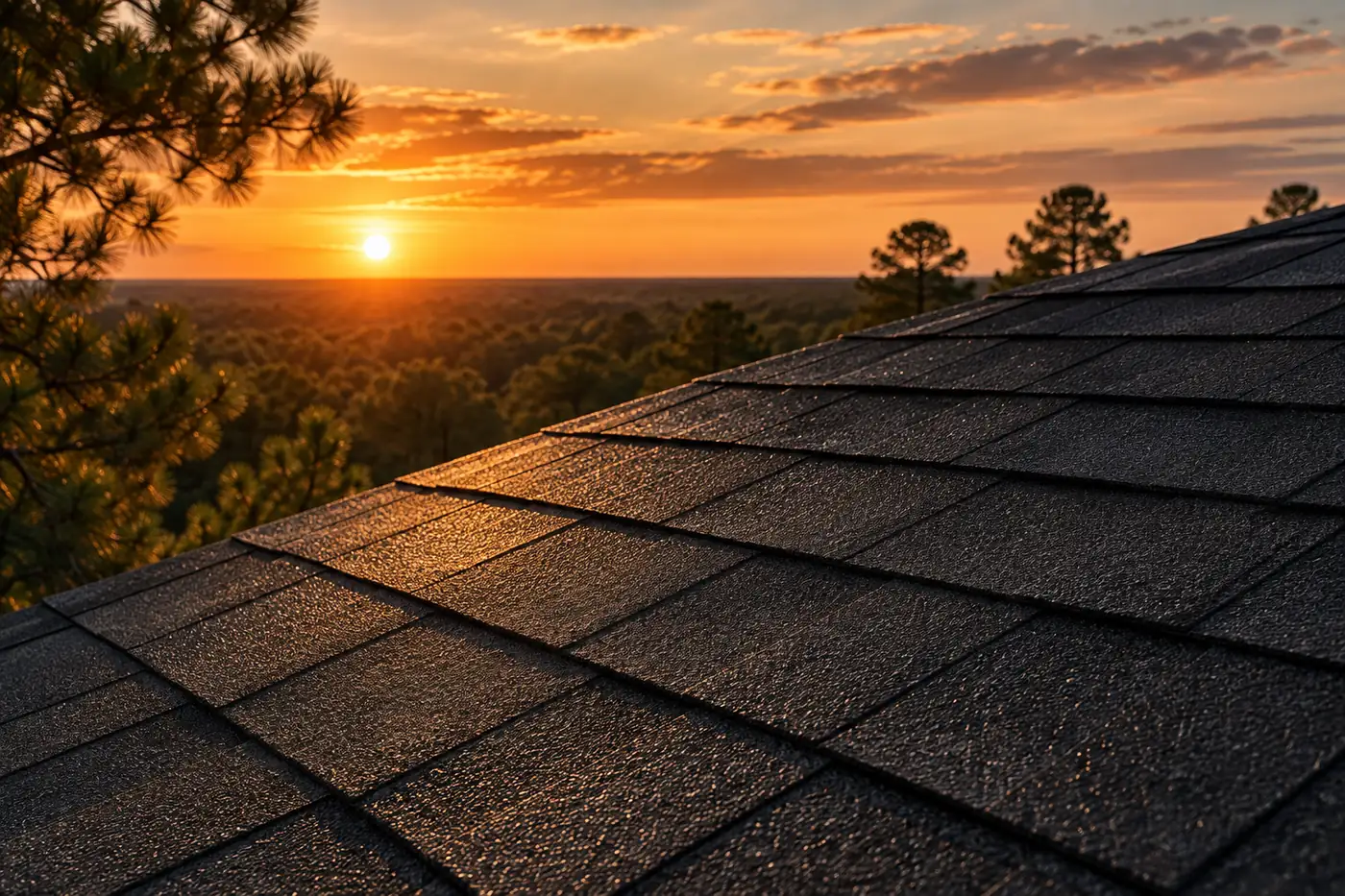
Your shingles have faded from dark to a chalky gray, and a few edges stick up on the side that gets the afternoon sun. A roofer took one look and said replace it.
Before you sign, look at what kind of shingle you have. If it’s the thick, layered kind, you may have more roof left than that quote suggests.
In The Woodlands, the median home was built in 2000, per the Census Bureau’s 2024 American Community Survey. A first roof on a house that age is about 26 years old now. If yours has been replaced, check the invoice for the date. Age is where we start. Condition is what settles it.
How to tell architectural shingles from 3-tab
Stand at the curb and look at the bottom edge of a row.
- Architectural shingles look thick and uneven. Each one is two layers bonded together, so you see shadow lines and a pattern a bit like wood shakes. Roofers also call them dimensional or laminated shingles.
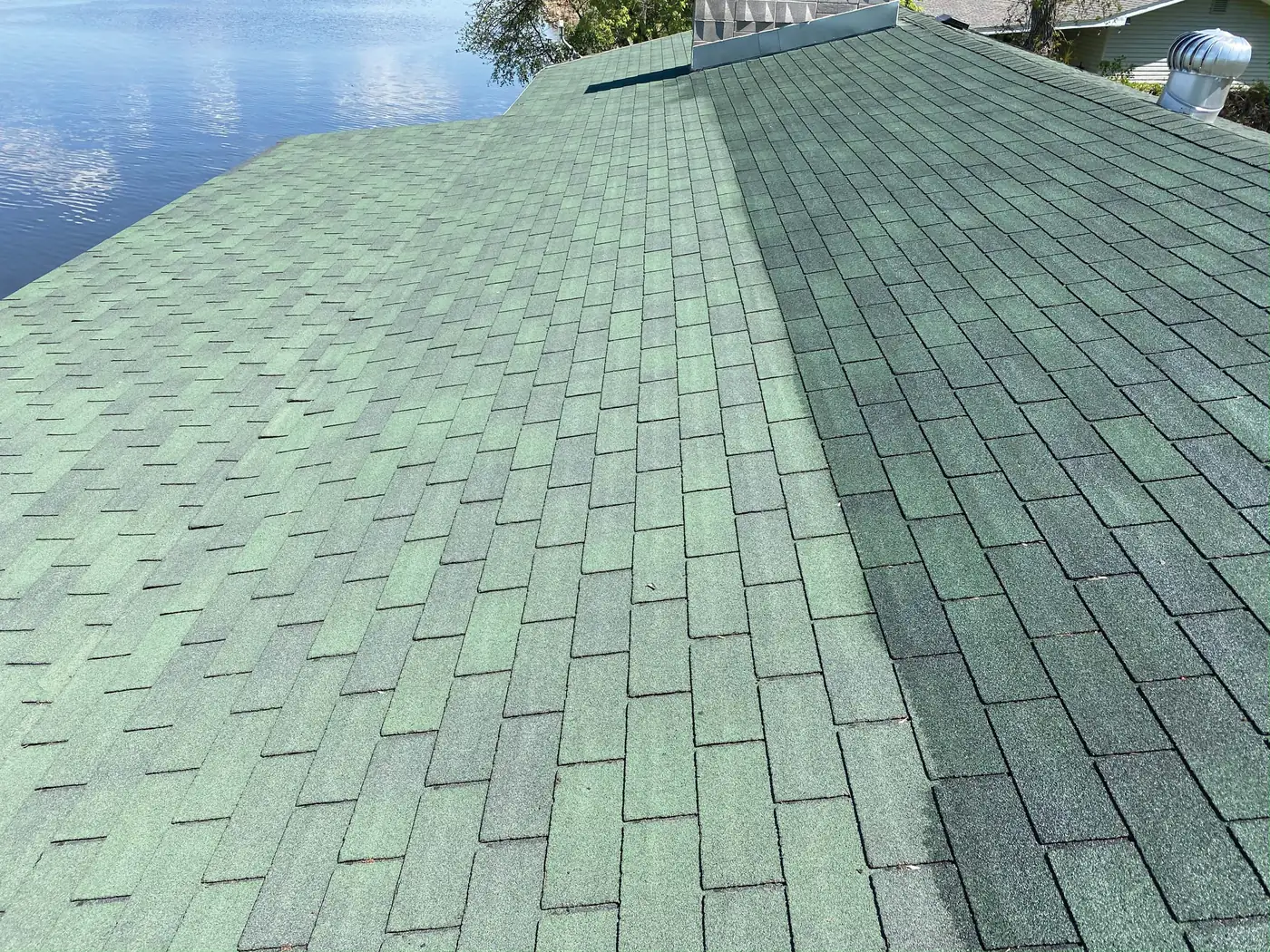
- 3-tab shingles look flat and thin. Each strip has two notches that split it into three even tabs, like a tidy row of bricks.
Paperwork helps too. Blue Truss, a roofer in The Woodlands, lists CertainTeed Landmark and GAF Timberline HDZ as standard architectural shingles. If one of those names is on your roofing invoice, you have your answer. If you have the thin, flat kind, our page on treating 3-tab shingle roofs fits your roof better. The two age differently.
What the Texas sun does to a two-layer shingle
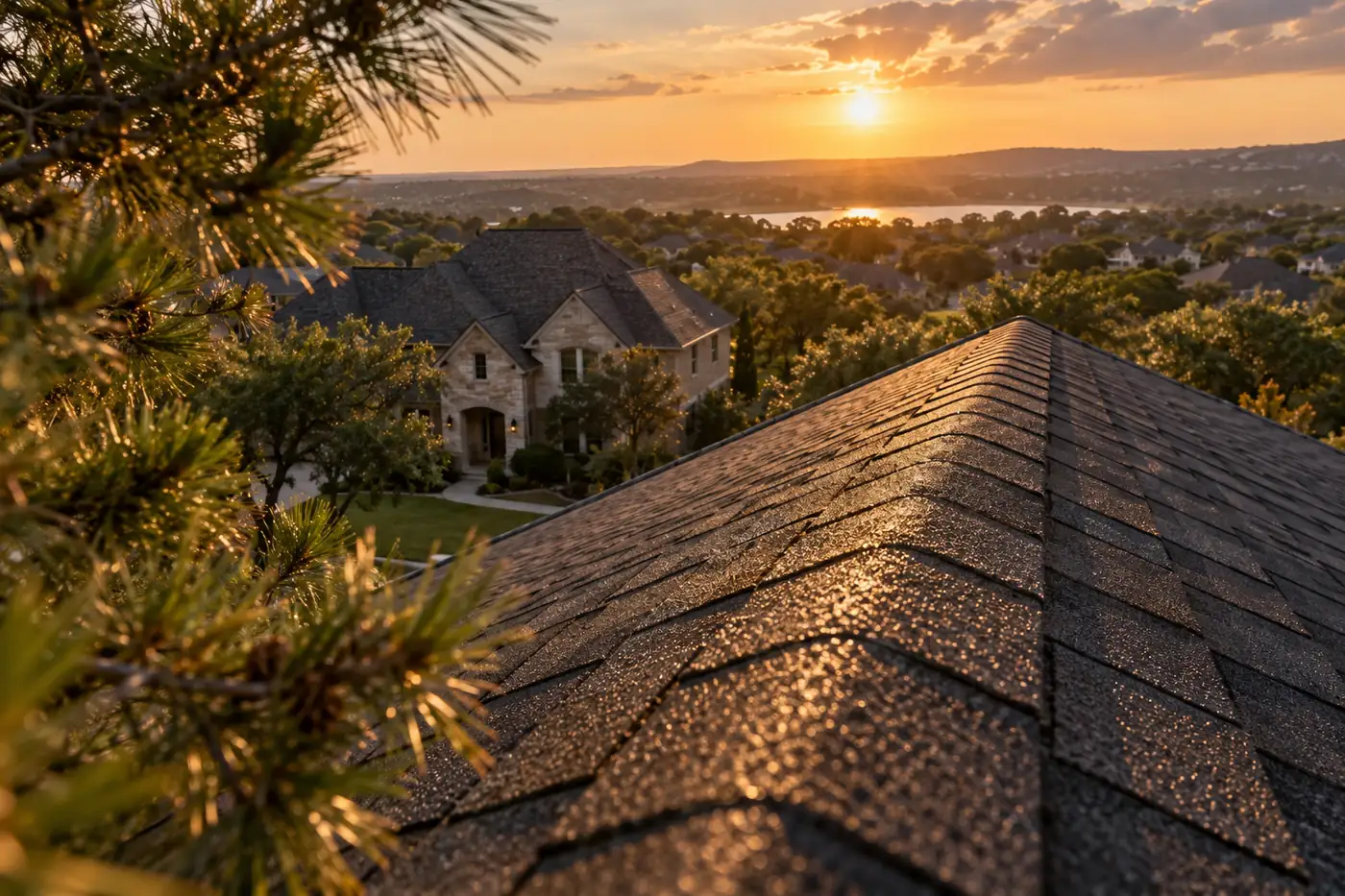
Shingles are made with asphalt, and asphalt holds oils. Heat and sun bake those oils out, a little more every summer. Houston’s average UV index in June is 10.3. That’s very high. The roof heats up all afternoon, cools off at night and does it again the next day. Over the years, the shingle dries out and stiffens.
Here’s what to look for on an architectural roof:
- The top layer fades first. Black or brown turns a flat gray.
- Granules wash off and collect in the gutters and at the bottom of the downspouts.
- The shingle gets stiff and doesn’t bend the way it used to.
- Edges start to lift where the two layers meet.
A little of each doesn’t mean the roof is done. It means it’s drying out. That’s the stage a treatment is made for.
Why a thicker shingle takes a treatment well
An architectural shingle has more asphalt in it than a thin 3-tab. That gives a treatment more shingle to soak into and more to keep flexible.
We use Bright Green Roof’s shingle treatment. It’s plant-based and USDA Certified Biobased. It soaks into the shingle instead of sitting on top like paint, and it restores flexibility. It won’t bring back granules that are gone, and it won’t fix a leak. The step-by-step on how it works has the details. The roof rejuvenation overview covers the warranty and who it’s for.
What we check before we say yes
The free assessment is Chris on your roof with a camera. On a two-layer shingle, these are the things that decide it.
- The layers. Are they still bonded? Edges that lift a little can still pass. Layers that have pulled apart can’t.
- Granule cover. Bare patches on the top layer are a warning. If more than about 40% of the granules are gone, replacement may be the better call, and we’ll tell you so.
- The mat. If the mat under the granules shows anywhere, that shingle is past treatment.
- Flex. Chris bends a corner. Stiff is normal on an older roof. Cracking isn’t.
- Everything else. Pipe boots, flashing, nail pops and the gutters. We don’t do repairs. If one of those needs work, Chris will tell you and point you to a roofer.
Want to check a few of these from the ground first? Use our roof candidate checklist.
What it costs next to a replacement quote
Blue Truss publishes that most Woodlands homes land between $20,000 and $32,000 for a replacement. The same page says a 2,500 square foot home might have a 28 to 32 square roof. A square is 100 square feet of roof, so that’s 2,800 to 3,200 square feet.
We charge $1.00 to $1.50 per square foot of roof, and the cleaning is included. On that same house, a treatment comes to $2,800 to $4,800. Chris sets your real number after he’s seen the roof. The roof rejuvenation cost page has more examples.
Those two prices buy different things. A replacement buys a new roof. A treatment buys time on the roof you have, if it’s still sound. If it isn’t, that replacement quote was the right call after all.
Your next step
In The Woodlands? Our Woodlands page covers the Township rules and the June 2025 hail. Wherever you live, the next step is the same. Book the free assessment, or call or text (281) 466-7436. You’ll get photos of every slope and a straight answer. That’s the Straight Answer Promise. If your roof isn’t a candidate, Chris tells you so, free, with the photos. If it’s fine, he says it’s fine.
Common questions
My Woodlands house was built around 2000. Is the roof too old to treat?
Maybe not. First, find out if it’s the original roof or a replacement. Your closing papers or an old roofing invoice should say. Bright Green Roof says to treat shingles at 10 years and older, and a roof past 20 can still qualify if it’s sound. So age alone doesn’t rule you out. What Chris finds on the roof does, and he’ll show you the photos.
Do lifting edges mean my architectural shingles are done?
Not always. A dry shingle shrinks, and the edges can lift where the layers meet. If the shingle still bends without cracking and most of the granules are there, it can still be a candidate. If the layers have split apart, or you can see the mat, it’s past treatment. That’s hard to judge from the yard, so Chris checks it up close.
How long will a treatment last on architectural shingles?
Bright Green Roof rates it for up to ten years per application, and backs flexibility with a 5-year transferable warranty. What you get on your roof depends on its condition when we treat it. A thick shingle that’s still sound is the best case. A thin, stiff one has less to work with. Ask Chris for the written warranty terms before you pay.